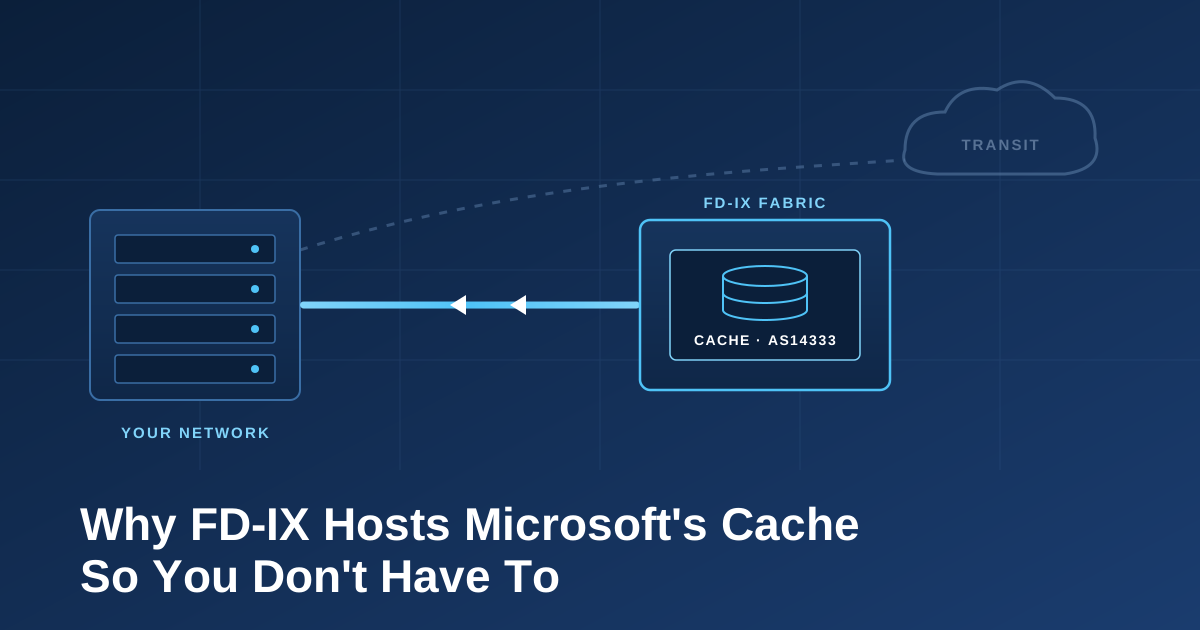
Why FD-IX Hosts Microsoft's Cache So You Don't Have To Microsoft's cache is free, but someone has to run it. Here's why FD-IX hosts it on the fabric so members save transit without owning another box.
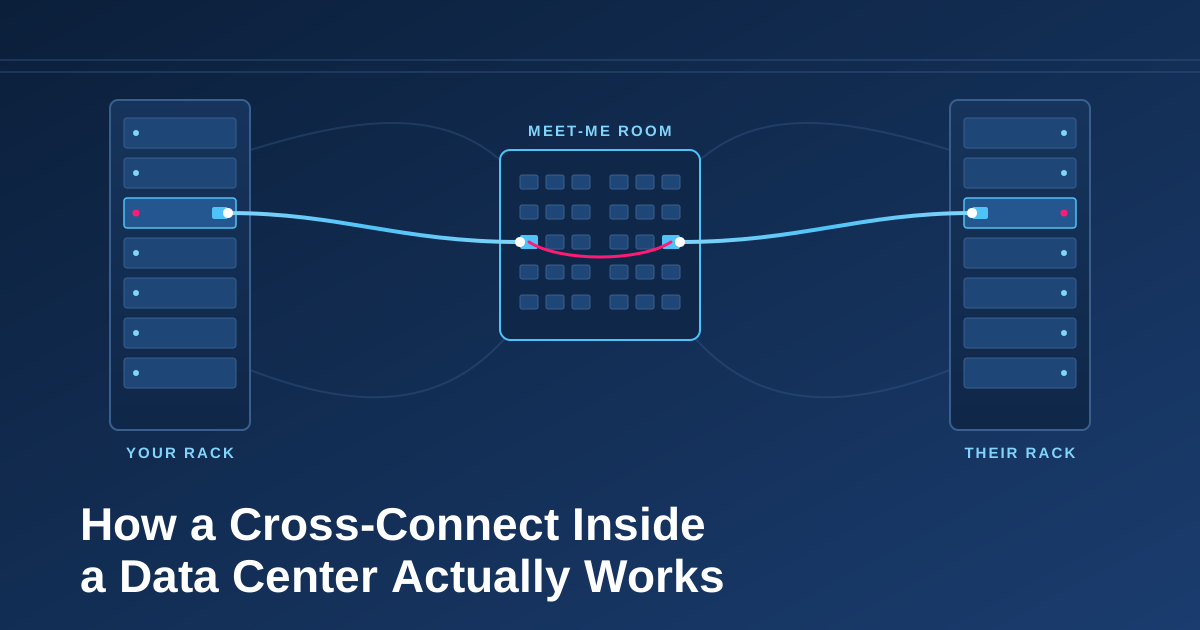
How a Cross-Connect Inside a Data Center Actually Works What a data center cross-connect is, how one gets ordered and built, and the fiber details that trip people up.
Why It Matters Who Owns the Wire Your Data Travels On Data sovereignty is not just a question of where data sits on a disk somewhere. It's about who can see your traffic, who controls the path it takes to get where it's going. Also, are the operators of these networks bound by your county’s laws?
FD-IX Internet Exchange in Nashville FD-IX Internet Exchange in Nashville: What's Live Now Nashville is FD-IX's newest interconnection market is live today. Here's what's available now and what to expect as it grows. Why Nashville Nashville has become one of the fastest-growing data center
Your Network's DDoS Defense Doesn't End at Your Border Most operators think about DDoS defense the same way they think about a firewall: something you configure at your own edge, for your own network, on your own time. That mental model misses half the picture. The peering fabric your network sits inside is itself part of your defense, for
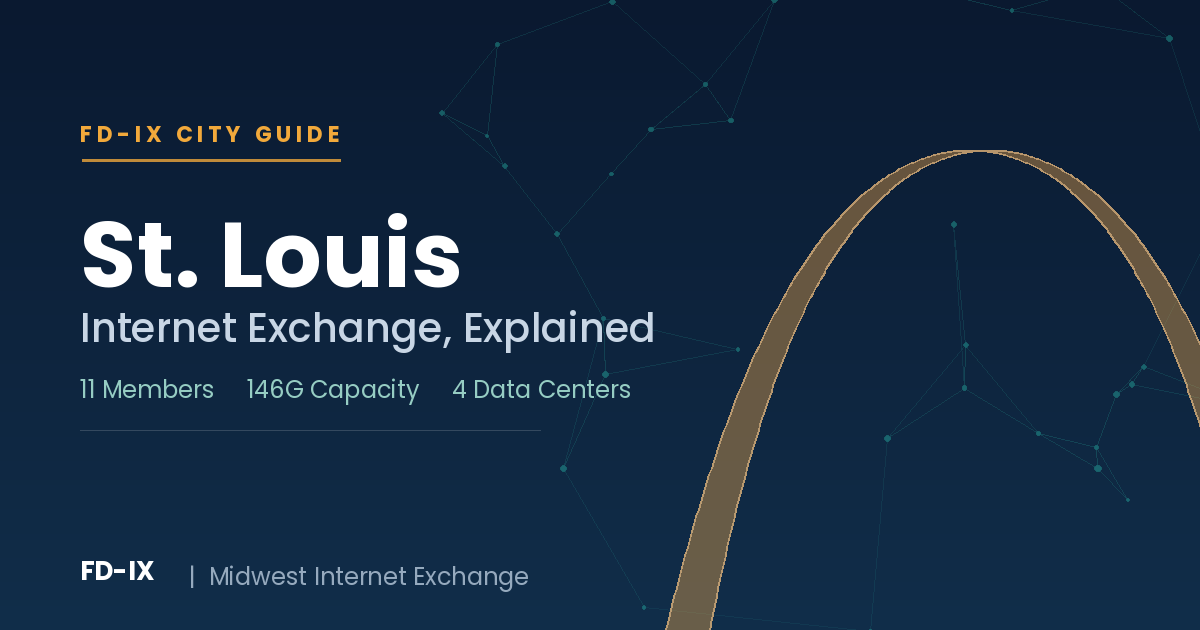
FD-IX Internet Exchange in St. Louis: The 2026 Guide By: Justin Wilson Read time: 2 Minutes St. Louis anchors the western point of FD-IX's Chicago–Indianapolis–St. Louis "IX triangle," and it's already one of our most active markets. If your network has infrastructure in or near St. Louis, here's
FD-IX Goes Live with Measurement Lab's BYOS Program We're excited to share that FD-IX has joined Measurement Lab (M-Lab) as a Bring Your Own Server (BYOS) partner — and our server is now live on the Indianapolis fabric.
What Really Happens Inside FD-IX An Internet exchange, such as FD-IX, is basically a Layer 2 switch that a bunch of networks plug into. Each member connects their router to a port on the exchange. The switch just moves Ethernet frames between those routers. It does not pick which Internet routes get used. That
National Broadband Co-Op (AS400701) Joins FD-IX, Strengthening Regional Connectivity The National Broadband Co-Op (NBBC) has taken a major step in its mission to support independent Internet providers by joining Fiber Data Internet Exchange (FD-IX). NBBC, operating under AS400701, represents operators who serve small towns, rural communities, and regions where the Internet depends on collaboration as much as
FD-IX Fast track for Bead winners FD-IX has put together a fast track for BEAD members to optimize the most out of your new traffic. Are you looking to reduce your broadband operating costs? Are you looking to improve application performance for your customers? FD-IX now offers a BEAD Fast Track Package. * Engineering consultation
Why CIOs should look at peering When CIOs start thinking about network performance, peering usually isn't the first thing on their list. Firewalls, SD-WAN, another bandwidth upgrade, maybe a second ISP for redundancy. All of that has its place. But none of it touches the one thing that actually determines where your traffic
George Washington, the Delaware, and Direct Routes When George Washington crossed the Delaware River on Christmas night in 1776, the goal was simple. Reach the objective by the most effective path
FD-IX is growing again in Indianapolis FD-IX gives Indianapolis networks a place to meet. If your routers are still sending local traffic out of market by default, peering may give you a cleaner path. Better routes are not magic.
Saving transit costs with peering If you do not have peering, your network pays transit fees to reach the Capital I Internet. Sometimes that is fine. The upstream takes the packet, carries it across its backbone, and hands it to someone else. The customer still gets where they are going, but that does not mean