Why FD-IX Hosts Microsoft's Cache So You Don't Have To
Microsoft's cache is free, but someone has to run it. Here's why FD-IX hosts it on the fabric so members save transit without owning another box.
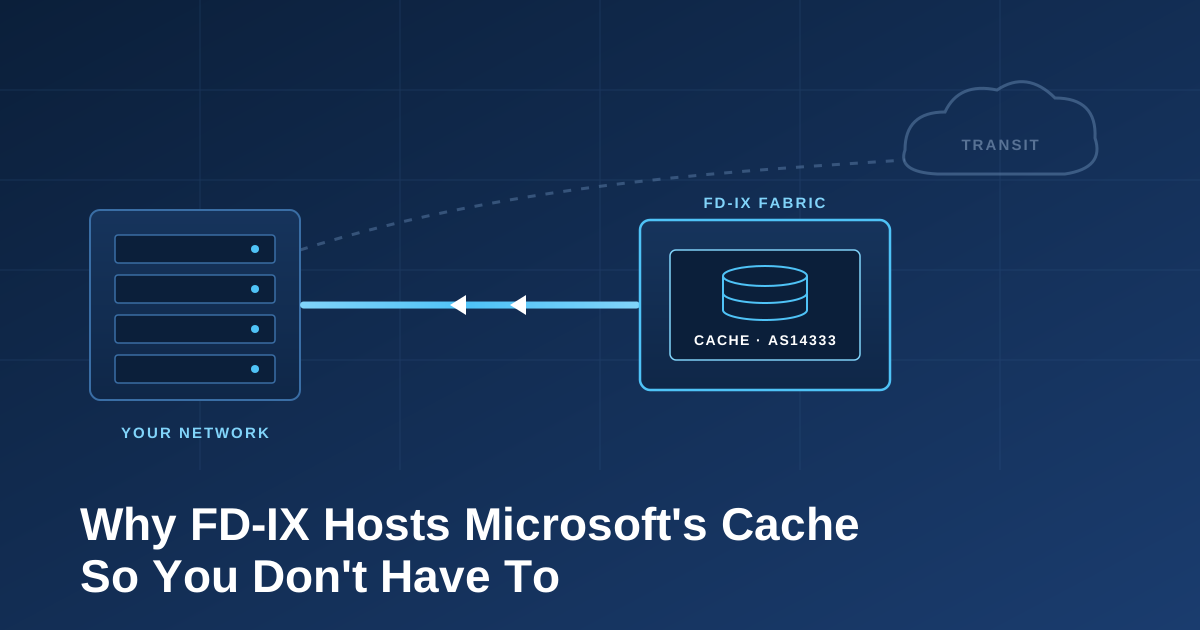
Microsoft runs its own CDN program for network operators called Microsoft Connected Cache, and the software is free. The catch is that someone has to run it. At FD-IX, we decided that someone should be us.
What gets cached
Connected Cache covers the heavy, repetitive stuff:
- Windows feature and quality updates
- Microsoft 365 Apps installs and updates
- Store and Intune-delivered apps
- Defender definition updates
- Xbox Game Pass for PC downloads
Say you have 3,000 subscribers and a Windows feature update drops. Without a cache, you pull that file through your upstream 3,000 times. With a cache on the exchange, those requests get served across your FD-IX port instead of your transit link.
Free doesn't mean free
For a mid-size node, Microsoft recommends something like a 16-core server with 32 GB of RAM and a few SSDs. You provision it through the Azure portal, run their deployment scripts, and keep your customer CIDR blocks current in Azure or bring up a BGP session between your router and the cache. Then you have patching, monitoring, dead drives, and deciding when it's too small.
It's just one more box you can tell yourself. If you're a WISP or a small fiber company, you already have OLTs, radios, DNS, CGNAT, to maintain. Another server that only matters once a month tends to fall to the bottom of the list, and then you pay for the hardware without getting the savings.
When the cache lives on the FD-IX fabric, you get the savings without owning the box. You have no server to buy, no Azure tenant to manage, and no drive to swap at 2 a.m.
How you get to it
If you're already on FD-IX and peering with the route servers, most of the work is done:
- Have an active FD-IX port (1G, 10G or 100G) with BGP up to RS1 and RS2.
- Add both your ASN and AS23372 (Microsoft) to your AS-SET in ARIN.
- That's it. The cache routes show up over your existing sessions and eligible traffic starts coming across the exchange.
The full walkthrough is in our Cloud Cache Access docs.
A couple of things to know going in. If a cache node goes down, Windows and Xbox clients fall back to Microsoft's regular CDN on their own. Your customers don't see an outage, and the traffic just goes back to your transit until the node is back.
Why we do this
Keeping traffic local is the reason an exchange exists. Every gigabit of Windows update that doesn't cross your transit link is money back in your budget, and every system you don't have to maintain is time back for your team. That's why we run it once, on the fabric, instead of asking every member to build and babysit their own.
If you're not on FD-IX yet, we're in 50 data centers across 8 states, so there's a good chance we're already in a building near you. Reach out and we'll get you peering.