Why It Matters Who Owns the Wire Your Data Travels On
Data sovereignty is not just a question of where data sits on a disk somewhere. It's about who can see your traffic, who controls the path it takes to get where it's going. Also, are the operators of these networks bound by your county’s laws?
The cost of routing through third parties
When your traffic moves through infrastructure you don't control, you inherit that infrastructure's problems. If they change direction, you find out after the fact. This also makes compliance harder. Regulators and customers increasingly want to know exactly where data travels and who has access to it along the way. If your traffic hops through a chain of networks you can't fully account for, you can't give them a straight answer.
Direct peering changes things
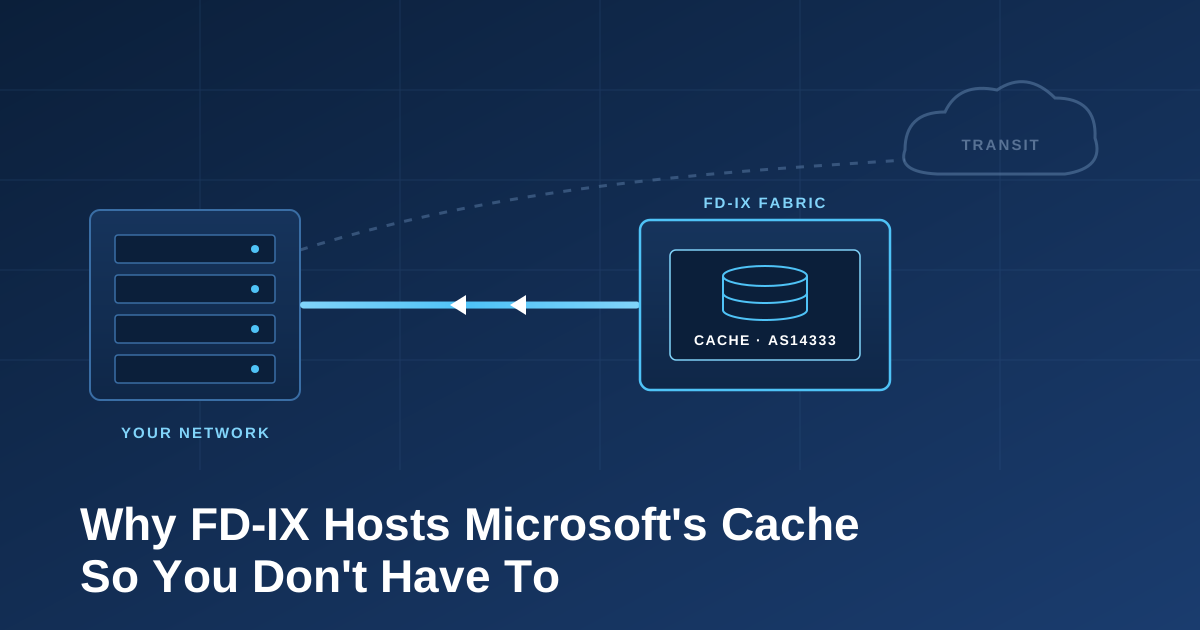
FD-IX facilitates your network connecting directly to other networks instead of routing through yet another connection. Our exchanges are separate fabrics, which matters for data sovereignty. The path gets shorter because fewer companies sit in the middle. You keep more control over where your data goes and who can see it moving. This isn't a small thing. Fewer hops means fewer points of failure and fewer companies with a view into your traffic. It's a real cut in the number of hands your data passes through before it reaches its destination.
A real example: Measurement Lab's Bring Your Own Server model
Measurement Lab runs an open platform for studying internet performance. For years, if you wanted to contribute data, you had to rely on a server M-Lab owned and operated. The BYOS project changes that. Now you run M-Lab's software on your own infrastructure. You're not sending measurement traffic through a server that belongs to someone else. You're running the server yourself. You control the box, where it sits, and you get direct access to the data it produces about your network's performance.
What this means for network operators
First, a network that owns its own gear, rather than reselling someone else's, does make a difference. When you operate your own infrastructure, you're not at the mercy of another company's decisions about such things as how your data is handled. Being neutral checks a lot of boxes.
Second, IX infrastructure is designed to keep your traffic close. The more networks your data passes through the more things can get complicated. You can also deduce where your traffic is flowing with looking glasses and other tools FD-IX provides.
Third, ask questions. Whose infrastructure does your traffic actually pass through? Who owns the hardware, and where does it sit? Is the company managed or owned by people in your country? The answers tell you a lot about how much control you actually have over your data.
Why this matters at FD-IX
An internet exchange exists so members can connect directly, thus keeping traffic local. Instead of routing it through networks they don't own, it stays local. That's the point. Every hop you remove is a company you no longer have to trust with your data.
Data sovereignty directly depends on who owns the infrastructure your traffic runs on. The more of that infrastructure you control, or connect to directly, the more control you have over your own data.