Why CIOs should look at peering
When CIOs start thinking about network performance, peering usually isn't the first thing on their list. Firewalls, SD-WAN, another bandwidth upgrade, maybe a second ISP for redundancy. All of that has its place. But none of it touches the one thing that actually determines where your traffic goes once it leaves your network: BGP. If every packet headed to Microsoft, Google, or Cloudflare exits through the same upstream transit provider, your users are stuck with whatever path that provider happens to pick.
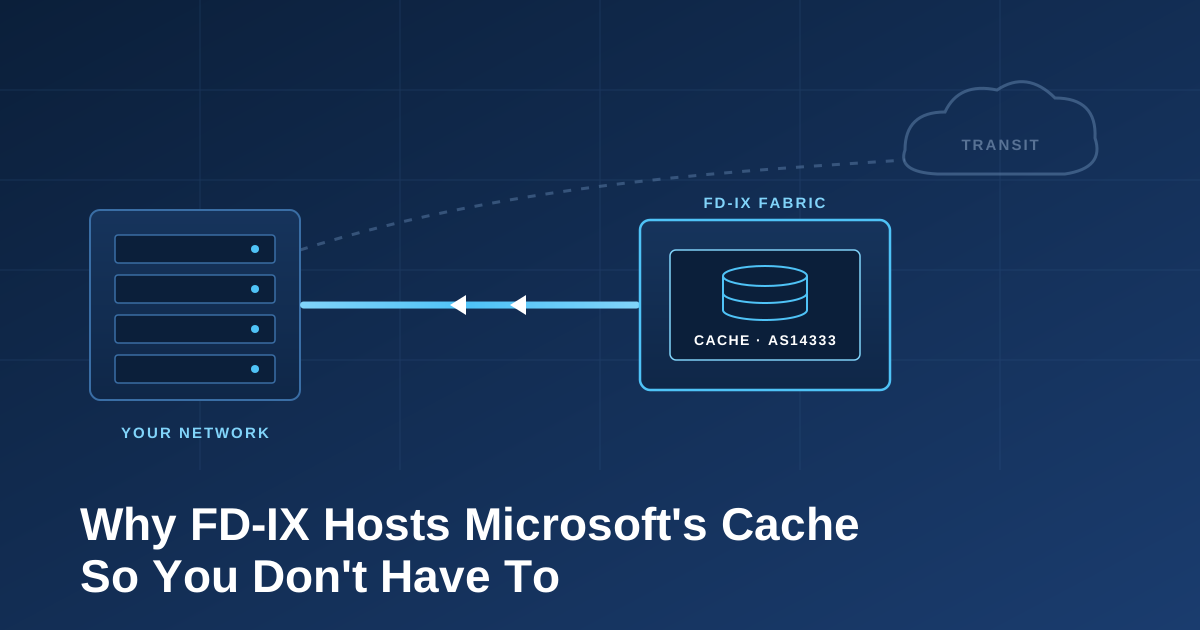
FD-IX gives you a second option. Rather than handing traffic to a transit provider and hoping it finds the most efficient route to a nearby cloud edge, you can establish BGP sessions with the networks already on the exchange fabric. Fewer AS hops and lower round-trip times are a key benefit of FD-IX.There's a lingering assumption that exchanges are only for Internet Service Providers (ISPs). That was fair a decade ago. It isn't anymore. Enterprise networks look very different today. They have customers on these ISPs. They are also accessing things in the cloud.
Bandwidth upgrades don't always fix the complaint they're bought to fix. It's common to see a 2 Gbps circuit running at 40% utilization while users still complain about choppy Teams calls or cloud apps that feel sluggish. The bandwidth was never the bottleneck. The traffic is just taking a longer, more congested route through several autonomous systems before it reaches its destination.SD-WAN helps with resiliency by picking the best available circuit at any given moment, but it can't shorten a path that doesn't exist. If both of your WAN circuits ultimately funnel through the same upstream transit providers, failover works fine, but latency can cause issues.. Peering actually changes the routing options on the table by adding new paths that weren't there before.
Cost enters the picture as usage climbs. Every gigabit pushed through transit is a gigabit of paid capacity being used up. Traffic that moves across settlement-free peering sessions doesn't touch that meter, which means fewer of those expensive circuit upgrades and better performance at the same time, not one or the other.
That's the problem we are solving at FD-IX. Shorter, more predictable paths to the services your users depend on all day. Whether that's Microsoft 365, a cloud-hosted app, or infrastructure running across multiple public clouds, better routing tends to move the needle more than another bandwidth upgrade ever will.