George Washington, the Delaware, and Direct Routes
When George Washington crossed the Delaware River on Christmas night in 1776, the goal was simple. Reach the objective by the most effective path

George Washington, the Delaware, and Direct Routes
When George Washington crossed the Delaware River on Christmas night in 1776, the goal was simple. Reach the objective by the most effective path while avoiding unnecessary delays and giving the opposing force as little warning as possible. The crossing was risky, but it created a more direct approach than waiting for the enemy to dictate the battle.
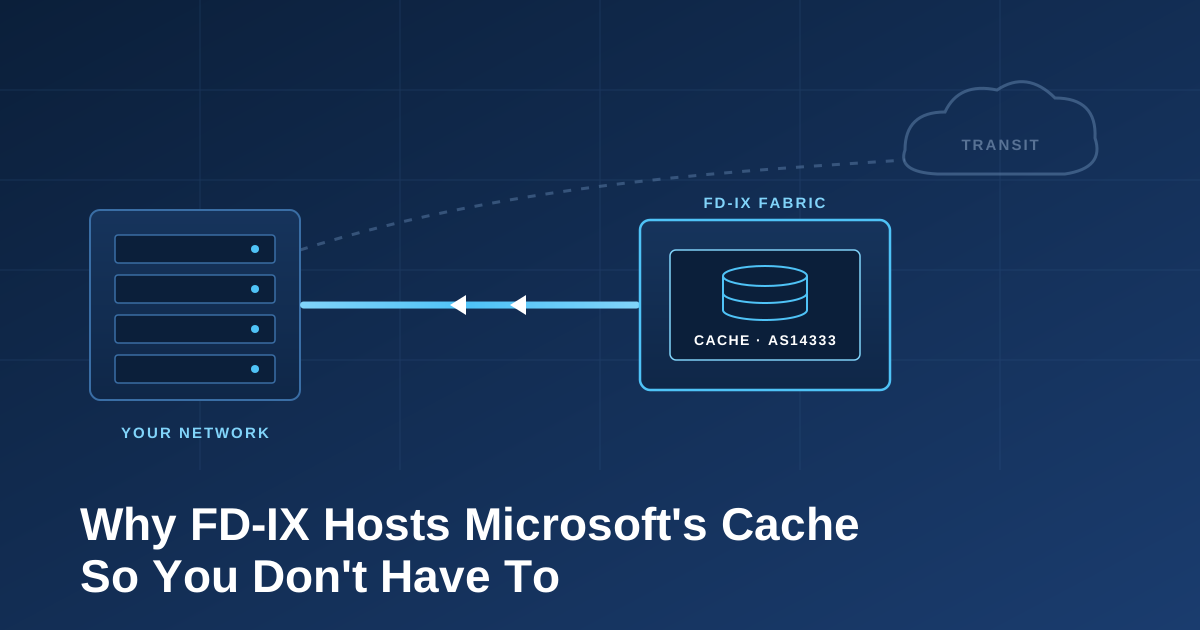
Networks work much the same way. Without peering, traffic often takes whatever transit path BGP selects. A packet going from one regional network to another may travel hundreds of extra miles before reaching its destination. The route works, but it is rarely the shortest one.
Peering changes that.
Instead of handing traffic to multiple upstream providers, two networks establish a direct connection and exchange traffic themselves. Fewer networks handle the packets. Fewer routers make forwarding decisions. Round-trip time often drops because the path is simply shorter.
George Washington did not win because he traveled farther. He succeeded because he chose a route that gave him an advantage. Good network design follows the same principle. When a direct path is available, there is little reason to send traffic on a long journey through someone else's network.
This Independence Day, declare your independence from slow routes. Peer locally. Keep traffic moving on the shortest path possible. FD-IX is here to help.