What Happens Without Peering?
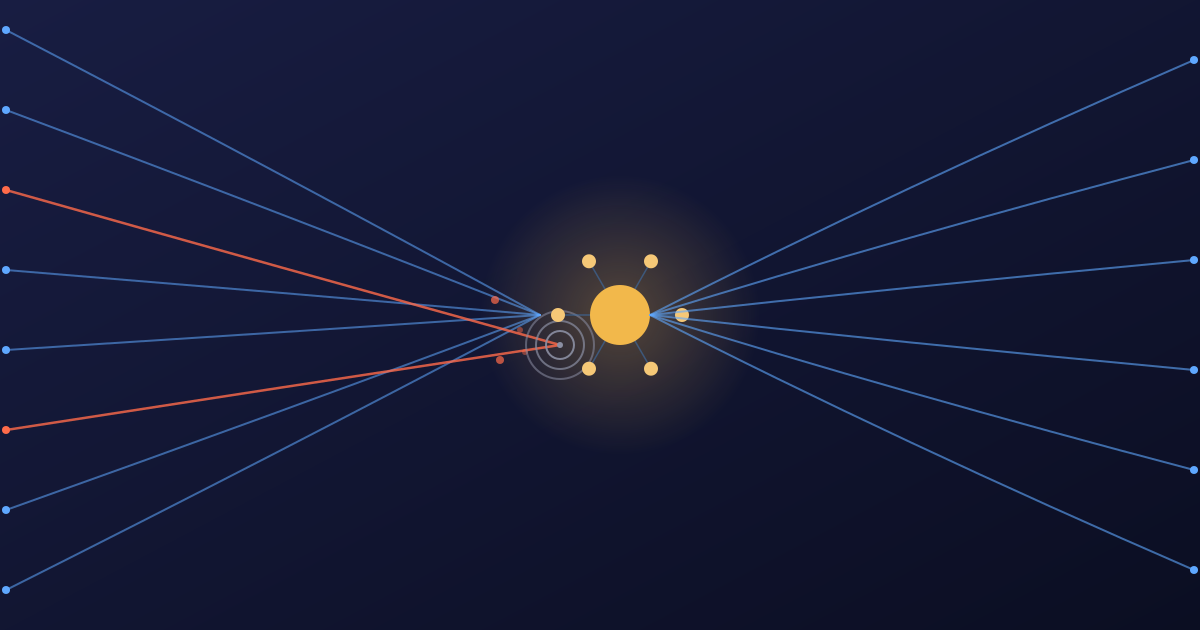
Without a direct path, your packets just follow whatever upstream route BGP hands out.
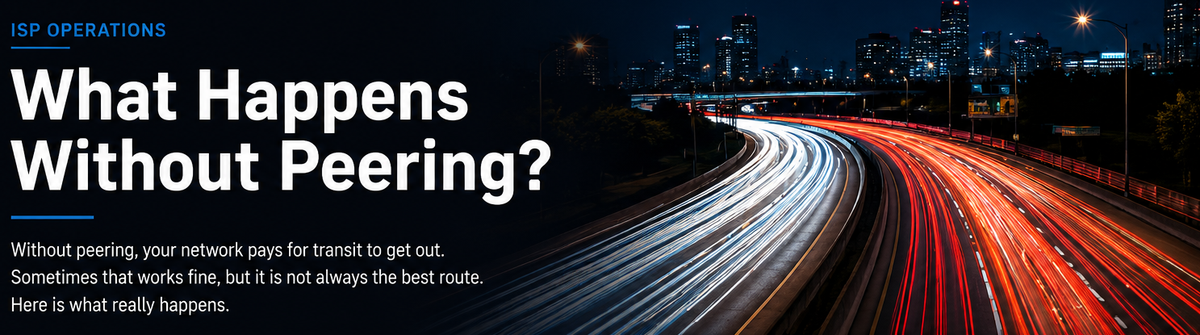
If you do not have peering, your network just pays for transit to get out. Sometimes that works fine, but it is not always the best route. Maybe a customer is trying to hit a cache or game server that is basically next door on the network. Without a direct path, your packets just follow whatever upstream route BGP hands out.
Run a traceroute, and you might see traffic leave your network, bounce off a carrier router a couple of states over, and then swing back toward where it was supposed to go. Nothing is broken here. The route works. It is just not the path you would pick if you had a local handoff. An extra 10 or 20 milliseconds does not usually matter when loading a web page. It starts to matter when a gamer complains about lag. The path did not break. It just took the long way.
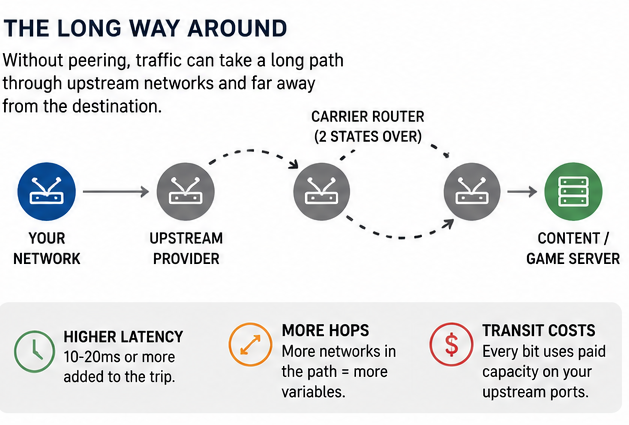
Every bit that goes out through an upstream provider eats up capacity on the port you are paying for. Streaming and cloud services all share the same transit links. When those usage graphs spike every night, your options are to buy more commit, add more ports, or find better paths.
Without peering, your peak traffic has fewer ways to exit your network. A big software update can fill up a transit link. A streaming event, such as the Tyson Fight a few years ago, can push your edge router harder than you planned for. When all that traffic relies on upstream transit, someone else’s network decides the path your customers end up using.
Peering does not get rid of the need for transit. You still need to reach the rest of the Internet. What peering does is keep local traffic from taking a paid detour through someone else’s backbone. That means less transit usage, fewer oddball paths, and more control over the packets your customers actually notice.