How peering can help weather related surges
Weather often reminds us that the Internet is a physical thing. Even though we call it “the cloud,” it depends on fiber in the ground, routers in buildings, and people at home, all of whom respond to the same storm
Weather often reminds us that the Internet is a physical thing. Even though we call it “the cloud,” it depends on fiber in the ground, routers in buildings, and people at home, all of whom respond to the same storm.
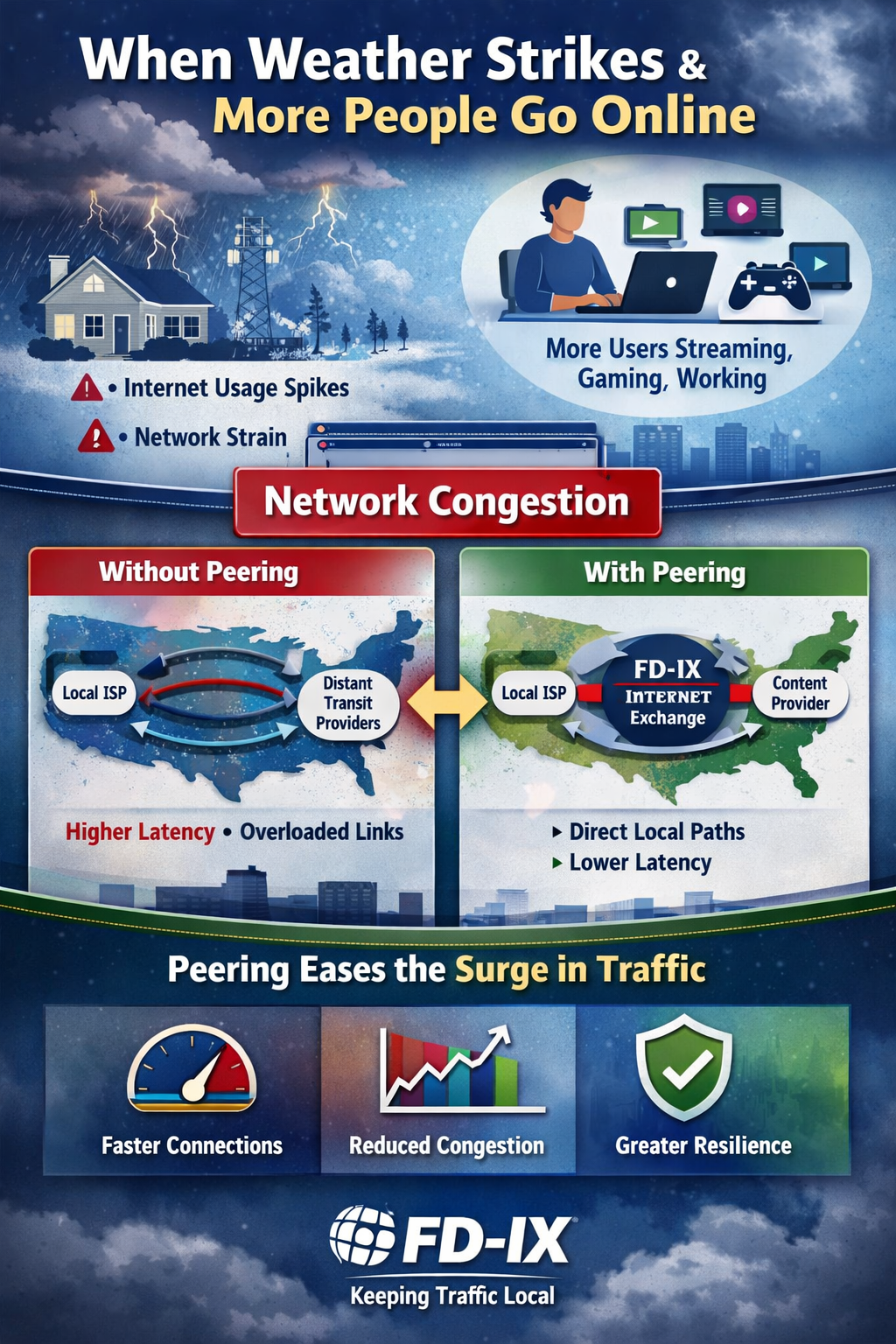
When bad weather rolls in, Internet use spikes. Snowstorms, heavy rain, heat waves, and severe cold all push people indoors. Work-from-home traffic rises. Kids stream more video. Gamers log longer sessions. Streaming services see prime-time traffic levels at noon. From an Internet provider’s view, this can look like a sudden flash crowd that lasts hours or even days.
Weather also puts stress on the network. Power can flicker, generators may need to run, and equipment might get hotter or colder than normal. Heavy rain can weaken wireless links. Field work slows because crews can’t always reach sites. All of this makes things harder when traffic is rising fast.
This creates a simple problem with a tricky solution. Demand rises just when it’s hardest to fix or expand the network. If traffic has to travel far through other providers, delays go up and connections fill quickly. Users notice, complaints come in, and no one is happy.
This is when peering proves its value.
Peering keeps traffic close to home. When networks connect directly at an Internet Exchange, data doesn’t have to cross the country and back just to reach a nearby provider. During weather surges, these shorter routes make a big difference. Delays stay low, busy links get relief, and more capacity is available for customers.
When more people are online, big content platforms see more traffic. Video, software updates, cloud apps, and games all spike at once. Good peering spreads this load over many direct routes instead of sending it through just a few paid links. It’s like adding more lanes where traffic is heavy, not far away.
At FD-IX, we see this happen every year. When bad weather comes, usage goes up. Networks with strong peering handle it with fewer problems. Those without good peering often find their weak spots just when customers need them most.
Weather is always unpredictable, but people’s habits during storms are not. They go online and stay online. Peering is one of the best ways for Internet providers to get ready for this. It cuts costs, boosts performance, and makes networks stronger when the weather is rough.
The Internet might seem abstract, but storms remind us it’s real. Good peering keeps data moving, even when the weather doesn’t cooperate.