How Data Centers Can Offer Internet Exchange Services Without Building Their Own IX
FD-IX Remote Peering gives your facility access to a carrier-grade peering fabric across the Midwest and beyond, using only a Layer 2 transport connection.
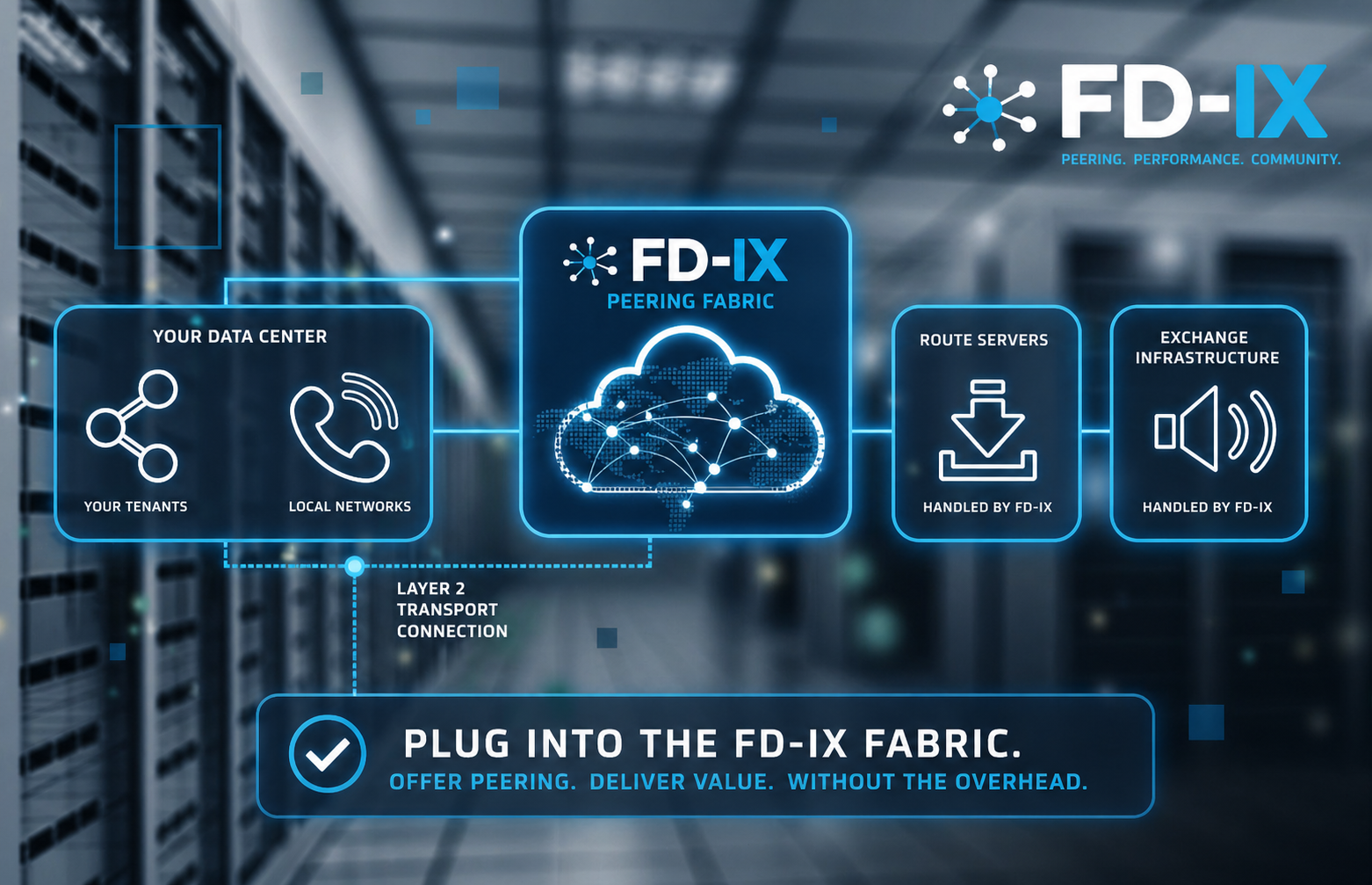
FD-IX Remote Peering gives your facility access to a carrier-grade peering fabric across the Midwest and beyond, using only a Layer 2 transport connection.
In the colocation and Data Center business, being different matters. Prospective tenants, including ISPs, content networks, cloud providers, and enterprise networks, are not just looking for power and cooling. They want connectivity options. They want to know who else is in the building, and whether they can reduce their IP transit costs by peering locally.For most data center operators, offering internet exchange services has historically meant one thing: building or hosting an IX from scratch. That requires dedicated hardware, ongoing management, a critical mass of connected networks, and significant time to develop. For regional and mid-market data centers, that has simply not been a practical path.FD-IX Remote Peering changes that calculus entirely.
What Is Remote Peering?
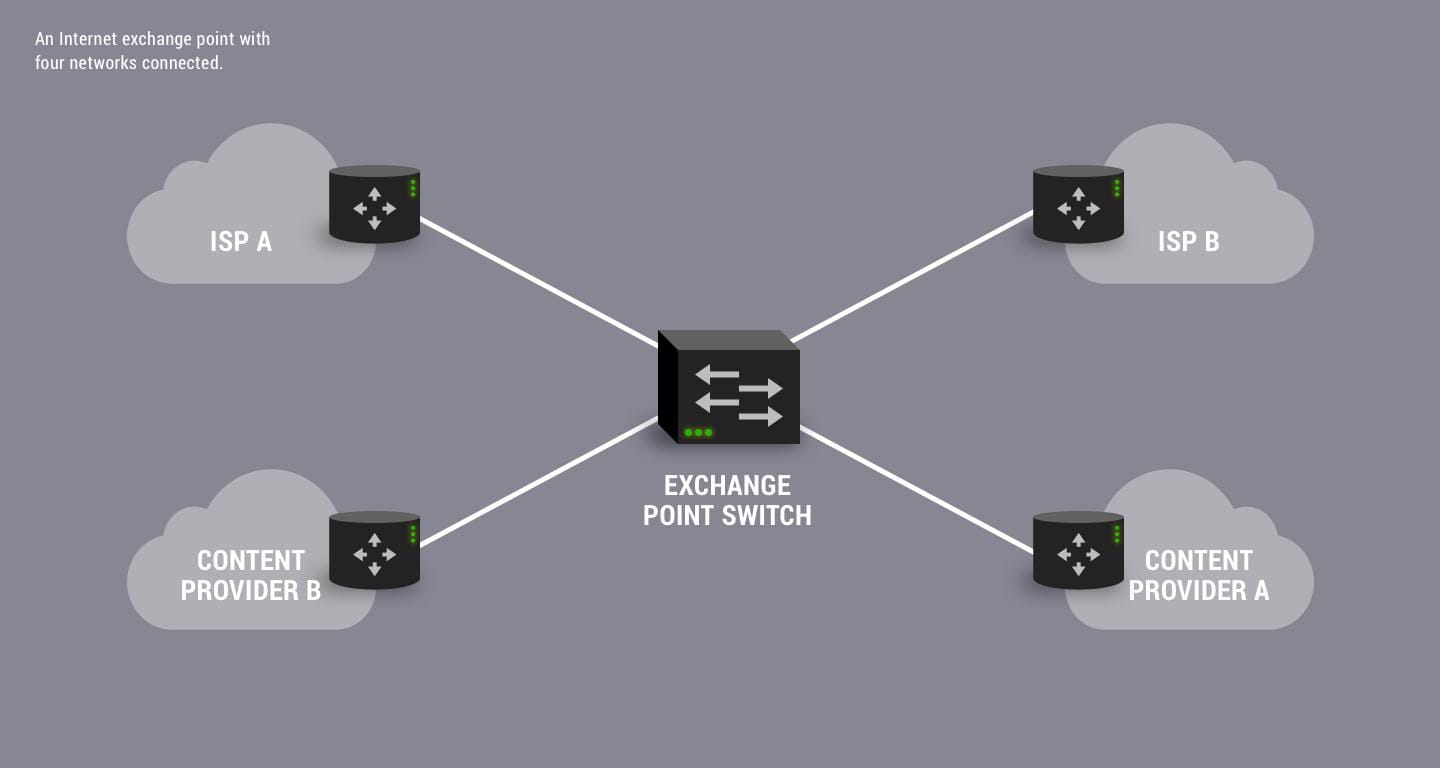
Remote peering is a method of connecting to an internet exchange without installing dedicated IX hardware at your facility. Instead of building out a local IX infrastructure, your data center establishes a Layer 2 transport circuit to an FD-IX-connected data center. Once that transport is in place, your tenants gain access to the full FD-IX peering fabric, including every network already peering at FD-IX nodes across the region.Think of it as plugging your building into an existing, operating internet exchange rather than standing up one of your own. Your tenants get the peering services they need. You get a powerful differentiator for your sales team, without the operational overhead of running an IX.
The Problem with Building Your Own IX
Some data center operators explore the idea of hosting their own internet exchange point. The appeal is obvious: full control, branding, and the ability to offer a native peering service to tenants. The reality is more complicated.A healthy IX requires a meaningful number of connected networks to provide value. That means sales cycles, onboarding, technical integration, and ongoing route server management. It requires investment in switching infrastructure, staffing, and compliance with open IX standards. And it means starting from zero on network density, which is precisely what makes an IX valuable in the first place.For most regional data centers, this is not a core competency, and it should not have to be. FD-IX Remote Peering lets you skip the buildout and go straight to the benefit.
How FD-IX Remote Peering Works
Getting started with FD-IX Remote Peering is straightforward. Here is what the process looks like:
- Connect via Layer 2 transport. Your data center establishes a Layer 2 circuit to an FD-IX connected facility. FD-IX maintains partner relationships across a growing number of data centers in the region, which makes sourcing this transport connection significantly easier than arranging it independently.
- No on-site FD-IX hardware required. There is no IX switching equipment to rack, configure, or maintain at your location. FD-IX manages the peering fabric. You provide the transport.
- Your tenants connect and peer. Once the transport is live, your tenants can connect to the FD-IX exchange and begin peering with networks across all FD-IX nodes. They get the same access to the peering ecosystem as any directly connected participant.
FD-IX handles the route servers, the switching infrastructure, and the peering ecosystem. Your team does not need to become IX operators to offer this service.
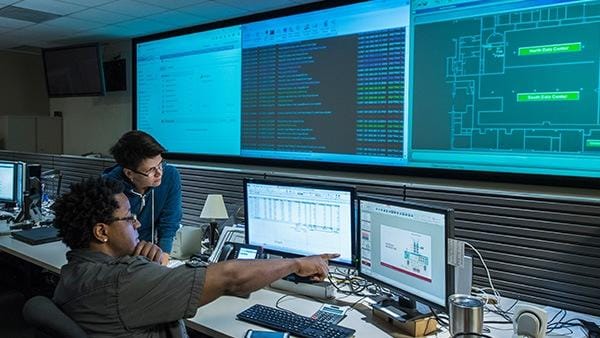
FD-IX Nodes: Coverage Where It Counts
One of the strongest advantages of partnering with FD-IX is its geographic reach. FD-IX operates nodes across seven markets, with a concentration in the Midwest, where independent internet exchange options have historically been limited:
This footprint means that regardless of where your data center is located, there is likely an FD-IX node within practical transport distance. It also means that when your tenants peer into FD-IX, they are joining a regional fabric spanning multiple markets, not a single-city exchange with limited reach.For Midwest data center operators in particular, FD-IX fills a genuine market gap. The region is home to significant network infrastructure, but has been underserved by the large coastal IX operators. FD-IX was built specifically for this market.
What Your Tenants Actually Get
When you offer FD-IX Remote Peering at your facility, the benefits flow directly to your tenants:
- Reduced IP transit costs. Peering allows networks to exchange traffic directly rather than paying a transit provider for every bit. For ISPs, content networks, and large enterprise networks, this can represent meaningful monthly savings.
- Lower latency. Traffic that peers locally stays local. Rather than routing traffic through a distant transit hub, peering at FD-IX keeps traffic on shorter paths, which improves performance for end users.
- Access to a growing peering ecosystem. Every network connected at any FD-IX node is a potential peer for your tenants. As the FD-IX fabric grows, so does the value of being on it.
- Operational simplicity. FD-IX manages the exchange infrastructure. Tenants get a clean interconnection service without having to negotiate individual bilateral peering agreements across dozens of networks.
Why This Matters for Your Data Center Business
Offering peering services changes how your facility is perceived. A data center that can offer IX access is not just selling rack space. It is selling a network ecosystem. That matters to the tenants who drive the most value: ISPs expanding their regional footprint, content delivery networks optimizing last-mile performance, and enterprise IT teams that need reliable, low-latency connectivity without paying transit for everything.It also matters in competitive Request for Proposals (RFP)s. Network-aware buyers ask about peering options early in the evaluation process. Having FD-IX Remote Peering available is a concrete, credible answer to that question, backed by an established regional exchange with a real network of connected peers.For data centers in secondary and tertiary markets, this is particularly significant. The assumption has long been that you need to be in Chicago or Dallas to access meaningful peering. FD-IX is built on the premise that this need not be true.
Who Should Consider FD-IX Remote Peering?
FD-IX Remote Peering is a strong fit for any data center operator that:
- Hosts or wants to attract ISPs, CDNs, or network operators as tenants.
- Is located in or near one of the FD-IX node markets
- Wants to set themselves apart against competing colocation providers without a major capital investment
- Has existing tenants asking about peering options, but lacks an on-site solution
- Is evaluating how to future-proof their connectivity offering as traffic volumes grow
You do not need to operate a large facility to benefit. Remote peering is designed to be accessible to colocation providers of all sizes, including regional operators who would never have considered standing up their own IX.
Getting Started with FD-IX
FD-IX works directly with data center operators to evaluate fit, identify the right connected facility for your transport, and walk through the technical requirements. The process is straightforward, and FD-IX's partner network in the region means that arranging the Layer 2 transport is rarely as complicated as it sounds.If you are a data center operator in Indianapolis, St. Louis, Chicago, Nashville, Cleveland, Amarillo, Austin, or anywhere in between, and you want to offer your tenants access to a real peering fabric, FD-IX Remote Peering is worth a conversation.